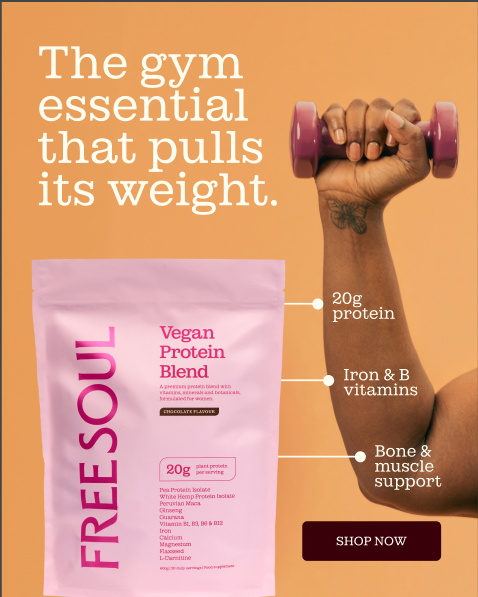
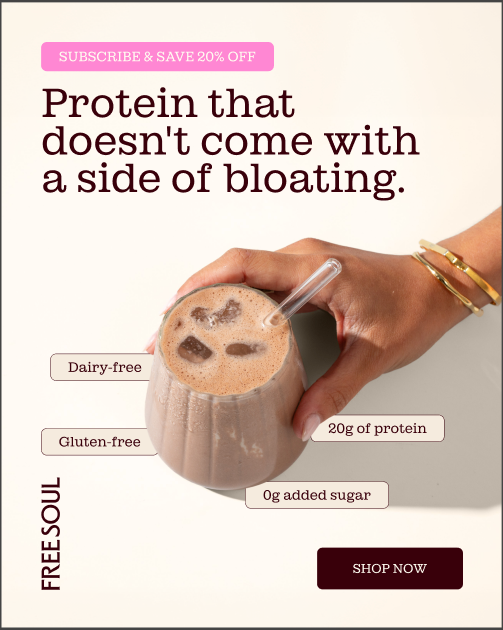
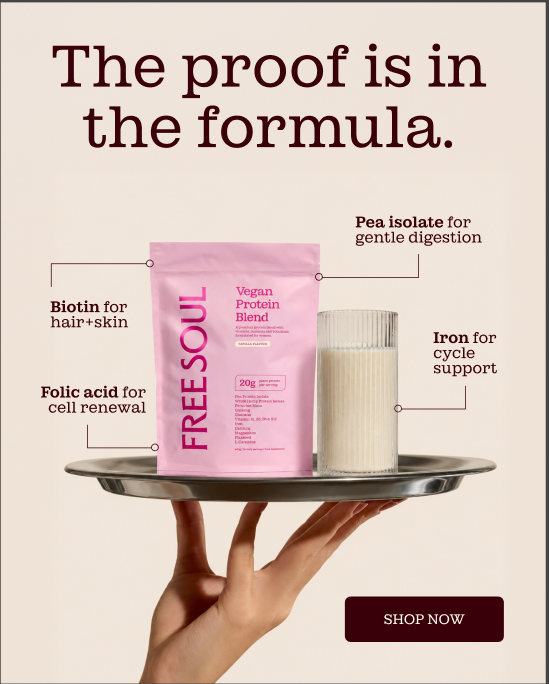
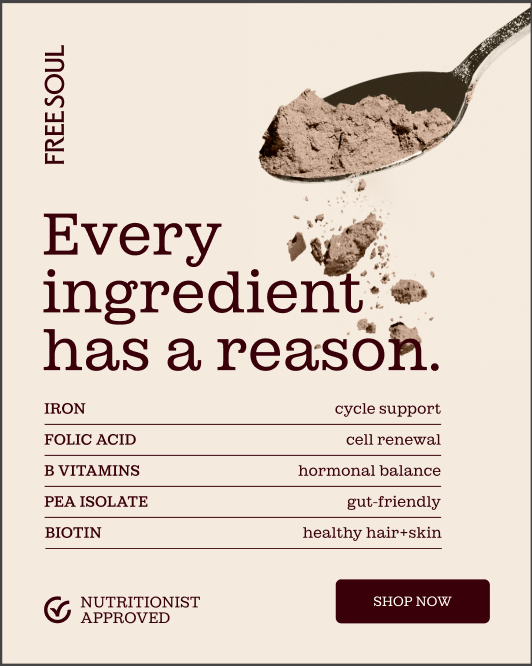
Problem: Every woman who's tried protein has a story about it. The bloating she assumed was her fault. The tub she borrowed from her boyfriend because nothing else seemed made for her. The hair thinning she quietly clocked in the mirror. Free Soul was built for exactly these women. The copy had to prove it knew them.
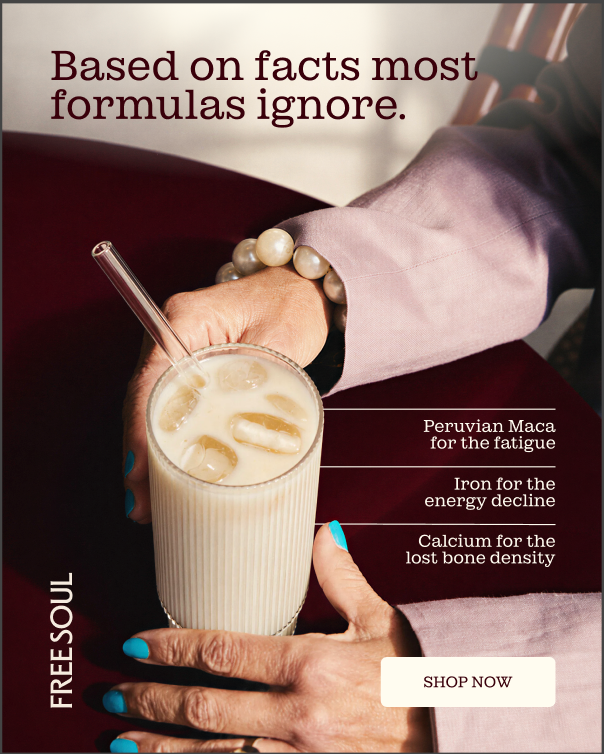
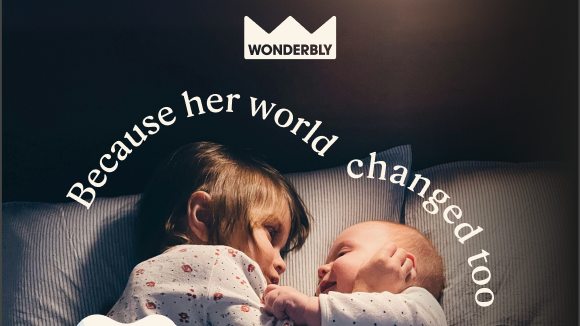
Solution: I started from the concern, never the product. Each concept took one real thing a woman was already carrying — a symptom she'd normalised, a change she'd been told to accept, a gap she'd been quietly working around — and met her at that exact moment. The PCOS researcher who'd been burned by empty promises got transparency, not another claim. The woman in perimenopause got acknowledgement, not a fix she'd stopped believing in. The vegan falling short on protein got a solution, not a lecture.
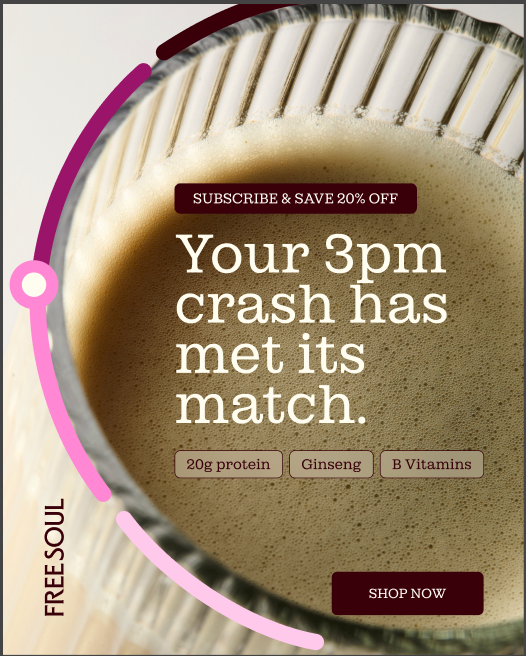
Every headline led with the feeling, never the formula — the 3am wake-ups, the energy that vanished by 3pm, the version of herself she was quietly working to get back. She felt recognised before she was ever sold to. That's why they landed. The concern came first and the product answered it, so the copy read like it already knew her, not like it was trying to reach her.